What Is Wind Electricity and How Does It Work?

Wind Electricity is power generated when moving air turns a turbine’s blades. The process looks simple from a distance, yet every stage involves careful engineering. Wind pushes the blades, which rotate a central shaft. A gearbox may increase this rotation speed. Then, a generator converts mechanical movement into electrical energy.

That electricity travels through cables to a transformer. The transformer adjusts its voltage for the local grid. Modern turbines also use sensors, control software, and braking systems. These tools help maintain stable operation during changing wind conditions. A turbine does not produce constant power. Calm weather can reduce output sharply. Strong winds may also require temporary shutdowns for safety. Grid operators therefore combine wind generation with storage, other power sources, and accurate weather forecasts.

The tower matters too. Higher elevations often provide stronger, steadier winds. However, taller structures can increase construction costs and visual concerns. Engineers study soil, wildlife, noise, maintenance access, and nearby communities before installation. Offshore turbines can capture powerful coastal winds, but saltwater creates demanding maintenance conditions.

Wind Electricity has clear advantages. It uses no fuel during operation and produces very low direct emissions. Still, describing it as completely impact-free would be misleading. Manufacturing, transportation, land use, and recycling require careful assessment. Reliable studies from energy agencies and grid operators support a balanced view. This introduction explains the core technology, while later sections can examine costs, environmental trade-offs, and real-world performance. The picture is promising, but not perfect.
What Is Wind Electricity and How Does It Work?

What Is Wind Electricity?

Wind electricity is electrical power produced from the movement of air. Wind pushes the turbine’s blades, turning a rotor around a central shaft. The generator then converts this mechanical motion into electricity. A gearbox may increase rotation speed, although some turbines use direct-drive systems. The electricity travels through cables to a transformer, where its voltage rises before entering the grid.

The resource is already substantial. The International Renewable Energy Agency reported 1,017 gigawatts of global wind capacity at the end of 2023. The Global Wind Energy Council recorded about 117 gigawatts of new installations during that year. These figures describe capacity, not constant output. A turbine only generates strongly when wind speed stays within its operating range.

No wind, no immediate power.

In practice, wind electricity works best beside forecasting, storage, flexible generation, and upgraded transmission lines. On a windy day, blades may rotate above fields while underground cables carry power toward distant homes. Offshore turbines face stronger winds, but saltwater, difficult maintenance, and underwater connections increase engineering demands. Land-based projects can be cheaper, yet nearby communities may question visual impact, noise, or wildlife risks.

The Intergovernmental Panel on Climate Change identifies wind power as a low-emission technology across its life cycle, though manufacturing still requires steel, concrete, copper, and other materials. The system is cleaner, not weightless. That distinction matters.
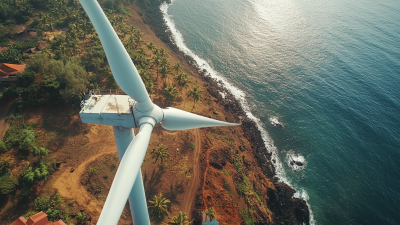
How Wind Energy Is Captured by Turbines

What Is Wind Electricity and How Does It Work?

The process starts outdoors. Wind is moving air, driven by uneven heating across Earth’s surface. When air meets turbine blades, their curved surfaces create lift, much like an airplane wing. This lift turns the rotor around a horizontal shaft. Wind electricity is captured through motion, not stored wind.

Inside the nacelle, the shaft drives a generator directly or through a gearbox. The generator converts rotation into electrical current. A transformer then raises the voltage for collection lines and the wider grid. Sensors adjust blade angles when wind speed changes. The control system must also stop the rotor during dangerous gusts. It is a careful balance.

The Global Wind Energy Council reported 116.6 gigawatts of new wind capacity in 2023. Global installed capacity passed 1,021 gigawatts that year. These figures show scale, but capacity is not constant output. Wind is variable. A turbine may stand tall while producing little power on a calm afternoon. The U.S. Department of Energy’s 2024 market report recorded average new land-based turbines near 3.4 megawatts, with rotor diameters around 133 meters. Larger blades reach stronger air higher above the ground. Still, bigger machines bring heavier components, complex maintenance, and uncertain local impacts. The engineering is impressive, but not perfectly tidy. Fancy charts can hide that limitation.

The Main Parts of a Wind Turbine

What Is Wind Electricity and How Does It Work?

A wind turbine changes moving air into electrical energy through several connected parts. The rotor includes the blades and central hub. Curved blades catch the wind and turn the hub around a horizontal shaft. Blade pitch controls how much wind reaches each blade. This adjustment protects the machine during very strong weather.

Behind the rotor sits the nacelle, a housing that contains the main working equipment. The low-speed shaft carries rotation from the hub to the gearbox. The gearbox increases rotational speed for the generator. Some modern turbines use direct-drive systems without a gearbox. The generator then converts mechanical movement into electricity. It is a delicate process. Heat, vibration, and worn bearings can reduce performance.

A yaw system turns the nacelle toward changing wind directions. An anemometer measures wind speed, while a wind vane detects direction. The controller uses these signals to adjust the turbine. A mechanical brake can stop the rotor during emergencies or maintenance. Below the nacelle, the tower supports the machine and carries cables downward. A transformer changes the electricity to a suitable voltage for the grid. During site inspections, technicians also check bolts, blade surfaces, oil levels, and foundation cracks. Small faults matter. I used to think taller towers always produced more power, but terrain, turbulence, and maintenance access can change that result.

How Wind Power Becomes Electrical Energy

What Is Wind Electricity and How Does It Work?

Wind electricity begins with moving air, not a plug. Uneven solar heating creates pressure differences, causing air to flow. Three blades capture part of this kinetic energy. Their rotation turns a shaft inside the nacelle. A gearbox may increase rotational speed, although some turbines use direct-drive designs. The generator then applies electromagnetic induction to produce alternating current. Simple in principle. Not perfectly predictable.

Power electronics stabilize the electricity’s frequency and voltage. A transformer raises the voltage for efficient transmission through the grid. Wind speed changes constantly, so output also rises and falls. Rated capacity is the maximum possible output, not the yearly average. Grid operators use weather forecasts, flexible generation, storage, and interconnections to manage these changes. The Global Wind Energy Council’s Global Wind Report 2024 recorded 117 gigawatts of new wind capacity installed in 2023. Global capacity passed 1,000 gigawatts. That scale is significant, but construction speed alone does not guarantee dependable power.

Tips: Compare annual energy estimates, not only turbine size. Check wind measurements from the actual site. Review grid connection limits and local weather patterns. Ask how blades, towers, and generators will be maintained. The International Energy Agency’s Renewables 2023 report also emphasizes faster permitting and stronger grids. Those practical details are easy to overlook. They can decide whether a promising project performs well.

What Is Wind Electricity and How Does It Work? - How Wind Power Becomes Electrical Energy

General engineering values and operating characteristics for modern wind-electricity systems. Actual values vary by site, design, and operating conditions.
Dimension How It Works Typical or Standard Value Electrical Energy Relevance Key Notes
Energy Source Moving air carries kinetic energy created by uneven solar heating of the Earth's surface. Renewable atmospheric energy Provides electricity without burning fuel during operation. Wind availability changes with weather, terrain, altitude, and season.
Wind Power Equation The available power is estimated using P = ½ρAv³. ρ ≈ 1.225 kg/m³ at standard sea-level air density Power increases with the cube of wind speed; doubling wind speed can increase available power by about eight times. P is power, ρ is air density, A is swept area, and v is wind speed.
Rotor Blades Aerodynamic lift makes the blades rotate when wind flows across their shaped surfaces. Usually 3 blades for large horizontal-axis turbines Converts a portion of wind kinetic energy into rotational mechanical energy. Blade pitch can be adjusted to control power and protect the turbine.
Swept Area The rotor captures wind across a circular area: A = πD²/4. Increases with the square of rotor diameter A larger rotor can capture more energy at the same wind speed. D represents rotor diameter; larger rotors generally require stronger structures.
Betz Limit A turbine must allow some air to continue moving through the rotor instead of stopping it completely. Maximum theoretical extraction: 59.3% Sets an upper physical limit on the fraction of wind power that can become mechanical power. Real turbines convert less than this limit because of aerodynamic, mechanical, and electrical losses.
Cut-In Wind Speed The turbine begins producing useful electrical power after wind reaches its minimum operating speed. Approximately 3–4 m/s Below this speed, electricity production is normally zero or too small for operation. The exact threshold depends on turbine design and control settings.
Rated Wind Speed The turbine reaches its rated electrical output as wind speed increases. Approximately 11–15 m/s The generator can deliver its nameplate capacity at or above this operating range. Power is usually regulated above rated speed to limit mechanical and electrical loads.
Cut-Out Wind Speed The turbine shuts down when wind becomes dangerously strong. Approximately 20–25 m/s Temporary shutdown prevents excessive loads and protects equipment. Restart normally occurs after wind speed falls to a safe level.
Drivetrain The low-speed rotor shaft transfers rotation to a generator, directly or through a gearbox. Direct-drive or geared configurations Transfers mechanical rotation while managing speed and torque. Both configurations are used in commercial wind turbines.
Generator Electromagnetic induction converts rotating mechanical energy into electricity. Alternating-current generator Produces electrical power that can be conditioned for grid connection. Power electronics may control voltage, frequency, and reactive power.
Tower and Hub Height The tower raises the rotor into stronger, more consistent airflow and supports the nacelle. Common modern utility-scale hub heights: about 80–180 m Higher hub heights can improve energy capture where wind speed increases with elevation. Actual height depends on turbine size, site conditions, and planning requirements.
Capacity Factor Compares actual annual electricity generation with the maximum possible generation at full rated output. Onshore: roughly 25–45%; offshore: roughly 40–60% Shows why annual energy production is lower than nameplate capacity multiplied by all hours in a year. Values vary significantly with wind resource, turbine size, curtailment, and maintenance.
Electrical Voltage Generated electricity is collected, transformed, and transmitted through electrical networks. Collection systems commonly use medium voltage; transmission uses higher voltage. Transformers reduce current for efficient long-distance transmission and later step voltage down for consumers. Exact voltage levels depend on the project and the local grid.
Grid Frequency Grid-connected equipment synchronizes electricity with the local power system. 50 Hz or 60 Hz, depending on the power system Maintains compatibility with appliances, generators, transmission systems, and grid controls. Power converters help variable-speed turbines meet grid requirements.
Typical Operating Life Components are inspected, maintained, and replaced as needed throughout the operating period. Approximately 20–30 years Determines the period over which the turbine can generate electricity and recover its costs. Actual service life depends on design, loading, maintenance, and repowering decisions.
Main Environmental Benefit Wind turbines generate electricity without direct combustion emissions during operation. Very low operational greenhouse-gas emissions Displaces electricity that might otherwise be generated from fossil fuels. Lifecycle impacts still include manufacturing, transportation, construction, maintenance, and end-of-life management.

How Wind Electricity Reaches Homes and Businesses

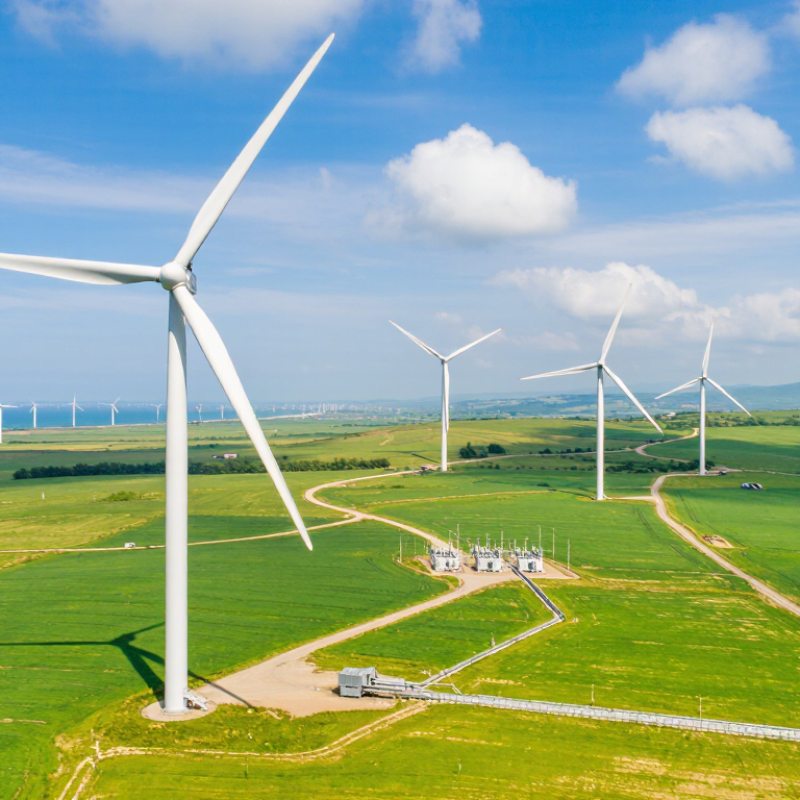
Wind electricity begins when moving air turns turbine blades. The rotor drives a generator, producing electrical power inside the nacelle. A transformer then raises the voltage for efficient travel across long-distance transmission lines. This process happens far from most customers.

The electricity does not usually travel directly from one turbine to one home. It enters a wind-farm substation, joins the wider grid, and moves through regional transmission networks. Local substations reduce the voltage before distribution lines carry power past streets and business districts. A household meter records its share of that constantly changing flow. The electrons are mixed together, so customers cannot identify a specific turbine powering their refrigerator.

Scale matters. The Global Wind Energy Council reported 117 gigawatts of new wind capacity worldwide in 2023. Total global capacity exceeded 1,000 gigawatts. In the United States, the Energy Information Administration reported that wind supplied about 10% of utility-scale electricity generation in 2023. Yet turbines cannot produce power on demand. Calm weather can reduce output within hours. Grid operators respond with forecasting, flexible generation, storage, and stronger connections between regions. Transmission delays remain a practical weakness. A wind farm may generate abundant electricity, while a distant city still faces limited delivery capacity. That gap is easy to overlook.

We are crowdfunding!
Privacy Overview

This website uses cookies so that we can provide you with the best user experience possible. Cookie information is stored in your browser and performs functions such as recognising you when you return to our website and helping our team to understand which sections of the website you find most interesting and useful.

Find out more about Kitepower's privacy policy